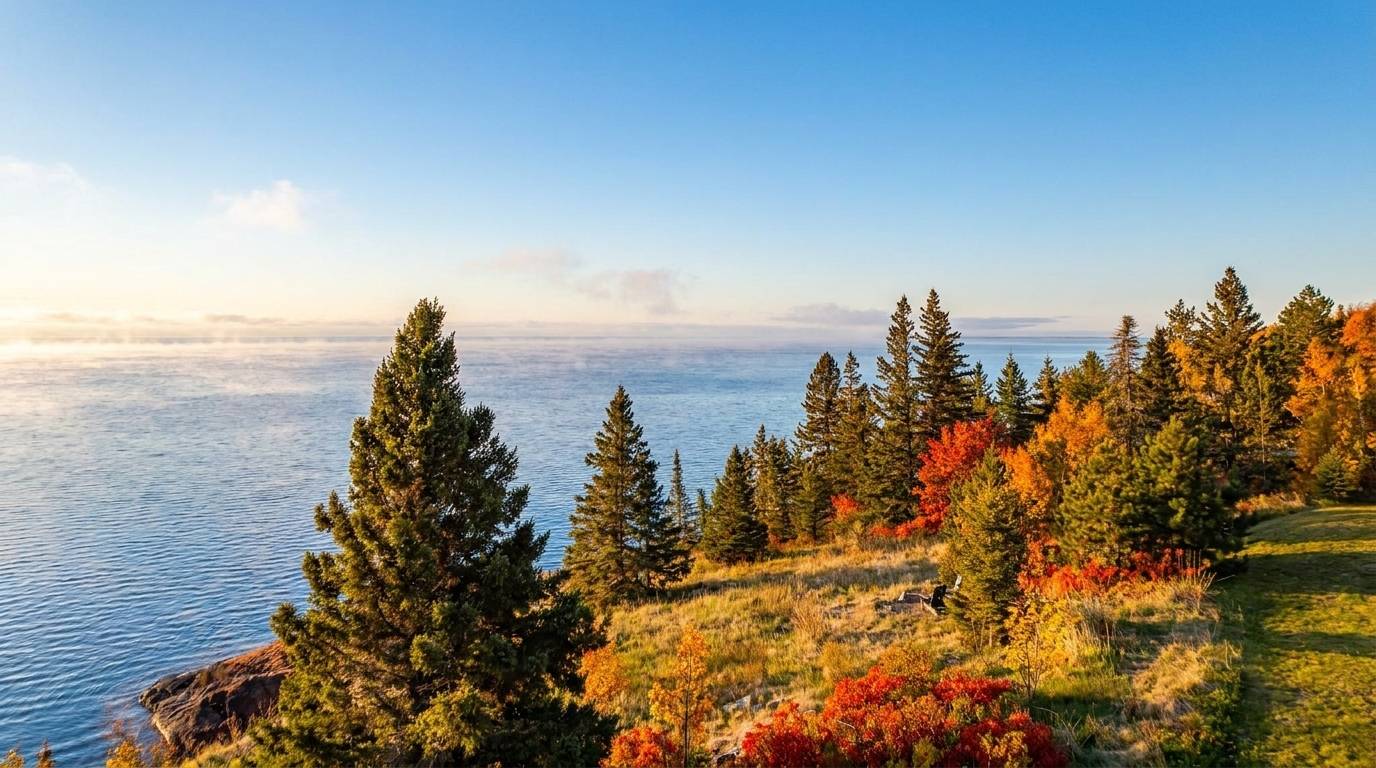
What you need to know now about fall colors in MN North Shore:
- The North Shore gets two separate fall color seasons: inland maples peak mid-September through early October, then shoreline birch and aspen peak two to three weeks later, running into mid-October.
- Lake Superior itself causes the delay. Cold water keeps the air along Highway 61 cooler than inland, which slows the shoreline trees down.
- Highway 61, the Gitchi-Gami bike trail, and a handful of short hikes near Tofte and Lutsen put you inside both color waves without much driving.
Keep reading and we will walk you through exactly when to go, where to hike, and what this particular season looks like on the ground.
Fall Colors in MN North Shore Don’t Peak Once. They Peak Twice.
Most of Minnesota gets one fall color season. The North Shore gets two, and that trips people up every year.
Inland ridges color first. The shoreline follows weeks later.
Plan around both waves and you can stretch a single trip across three weeks of decent color instead of gambling on one weekend.
We watch this happen every year from the deck at Aspenwood, our Lake Superior cabin in Tofte. The maples on the inland ridge behind us always go first.
A front-row seat to both color waves beats any overlook pullout. See the Lake Superior cabin our guests use as their fall color basecamp. Explore Aspenwood on Lake Superior →
When Do Fall Colors Peak on Minnesota’s North Shore?
Highland maples on the Sawtooth Mountain ridges peak first, from mid-September into early October. Shoreline birch and aspen along Highway 61 follow two to three weeks later, holding color into mid-October. The gap between the two waves is what makes the North Shore unusual, and it is the single most useful fact for timing a trip.
Highland Maples: Mid-September to Early October
Sugar maples on the ridges above Tofte and Lutsen turn first. They run deep red, orange, and crimson.
Start inland if you’re visiting in the first half of the window. Trailheads off the Sawtooth ridge lines and the Superior National Forest Scenic Byway catch this wave earliest.
Shoreline Birch and Aspen: Late September to Mid-October
Trees directly along Highway 61 change later. Gold and yellow birch and aspen dominate this second wave.
The Explore Minnesota guide to the region puts the gap at up to two weeks, driven by the cooling effect of the big lake.
How to Track the Color in Real Time
Don’t guess. The Minnesota Department of Natural Resources updates its statewide Fall Color Finder every Thursday through the end of October, with a date slider that compares the current season to past years.
State park staff and volunteers submit the leaf reports that feed the map, so it runs closer to ground truth than a generic forecast.
Why Does the North Shore Get Two Separate Color Seasons?
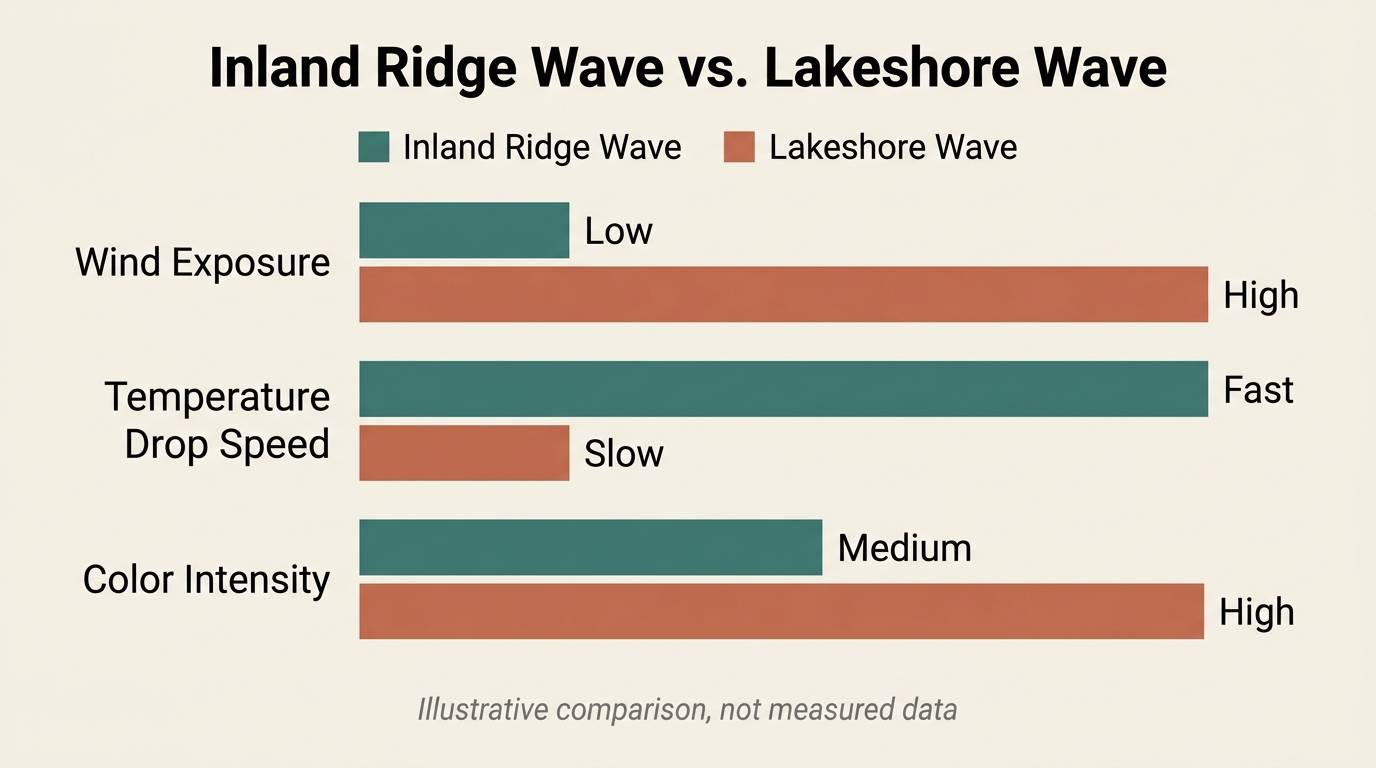
Two factors drive the split: elevation and Lake Superior’s cooling effect. Inland ridges lose warmth faster and change color first, while trees near the shoreline stay warmer longer because the lake holds heat into early autumn. That temperature lag is the entire reason the North Shore colors twice instead of once.
Color change itself comes down to chemistry. As the U.S. Forest Service explains, chlorophyll breaks down once days shorten and temperatures drop, which unmasks the yellow and orange pigments that were in the leaf all along. Red and purple tones show up separately, produced fresh in late summer as a stress response to that first cold snap.
Lake Superior slows this process down along the shore. Cold, deep water acts like a thermal buffer, keeping shoreline air milder than inland air for weeks at a stretch.
That is why a maple forty miles inland can be bare by the time a birch grove on Highway 61 hits peak color.
| Feature | Highland Maple Wave | Shoreline Birch & Aspen Wave |
|---|---|---|
| Typical Peak Window | Mid-September to early October | Late September to mid-October |
| Dominant Colors | Red, orange, crimson | Gold, yellow, amber |
| Where It Happens | Sawtooth Mountain ridgeline | Highway 61 corridor, lake level |
| Driven By | Elevation, earlier cold exposure | Lake Superior’s moderating warmth |
| Best Transportation | Inland trailheads, forest byways | Car, bike, or the gondola |
How Is the 2026 Season Shaping Up?
This year’s color is arriving on the usual calendar, but drought conditions are making it less uniform than a typical season. Minnesota DNR forest health staff are flagging early leaf drop in some stressed trees and dulled color in others, which means the map matters more than the date on the calendar this fall.
Brian Schwingle, the DNR’s forest health program consultant, put it plainly in the agency’s own September briefing: severe drought can lessen the brilliance of some colors and push certain trees to drop leaves early, while warmer September temperatures can delay peak color in others, the same pattern seen during the 2023 drought year.
That is a real shift from a “normal” season. A general fall color roundup rarely mentions it.
Two ridgelines five miles apart could be on completely different timelines this October, depending on soil moisture alone.
Practically, this means picking a flexible travel window beats locking in one specific weekend months in advance.
Where Are the Best Hikes for Leaf-Peeping?
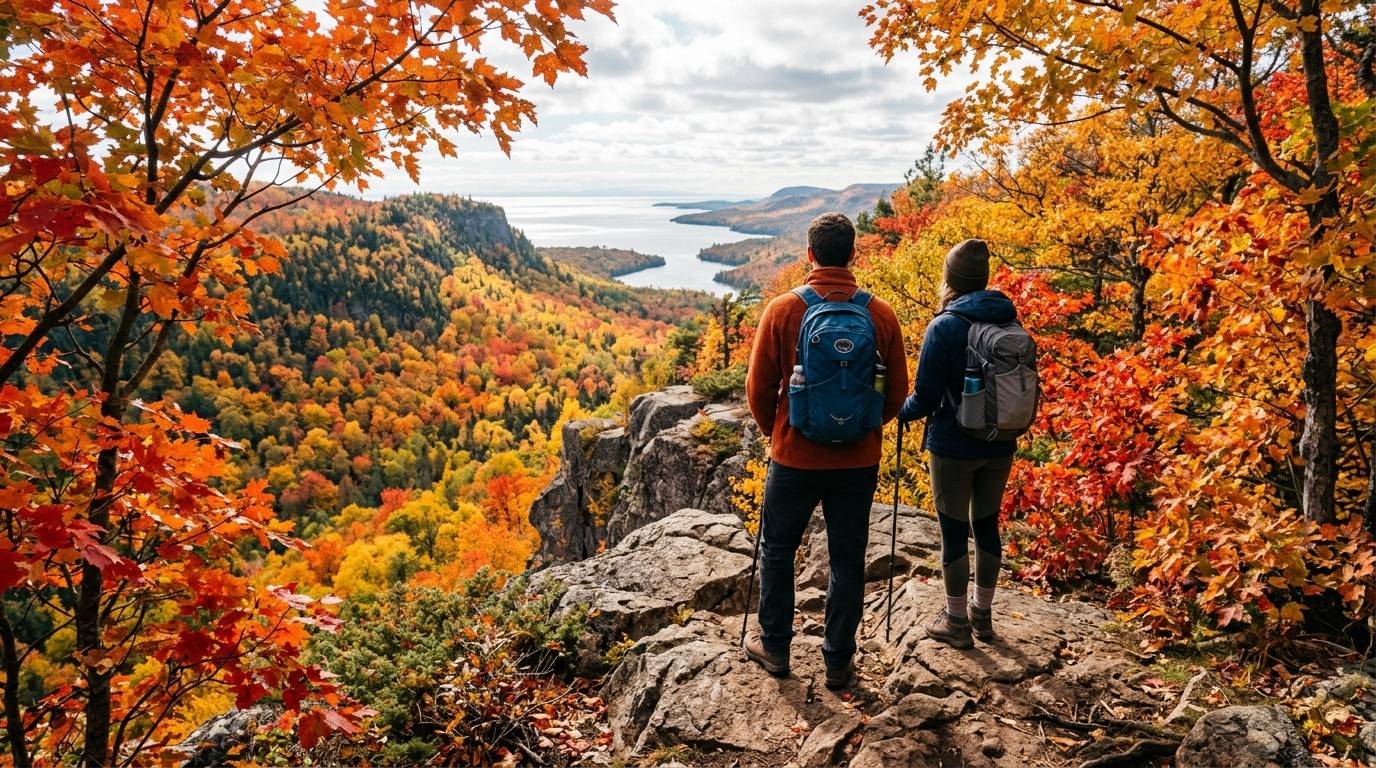
The Oberg Mountain Loop, Shovel Point, Palisade Head, and the Gooseberry River gorge cover the range from easy overlooks to dramatic cliff views, and all four sit within a short drive of Tofte. Pick based on how much climbing you want to do and whether you’d rather see the lake from above or the falls from below.
Oberg Mountain Loop, Near Tofte
This two-mile loop is the easiest big payoff on the whole shore. Nine separate overlooks frame red maples against open lake views.
Families do this one. So do people who just want a short hike before dinner.
Shovel Point at Tettegouche State Park, Near Silver Bay
Shovel Point delivers cliffside drama that the Oberg loop doesn’t. Sunrise light on the canopy below the cliffs is worth the early wake-up call.
Palisade Head, Near Beaver Bay
A short walk gets you to a towering rock overlook with sweeping views of the shoreline and forest canopy mixed together. It’s one of the few spots where you see color and coastline in the same frame without much effort.
Gooseberry Falls State Park Gorge, Near Two Harbors
Waterfalls plus fall color plus an easy paved path near the visitor center make this the pick for anyone traveling with kids or limited mobility.
Superior Hiking Trail Access Points
For longer hikes, the Superior Hiking Trail Association maintains over 300 miles of ridgeline trail with more than 50 trailheads between Duluth and the Canadian border. Pick a short loop rather than attempting the whole thing in an afternoon.
What Are the Best Scenic Drives and North Shore Experiences?
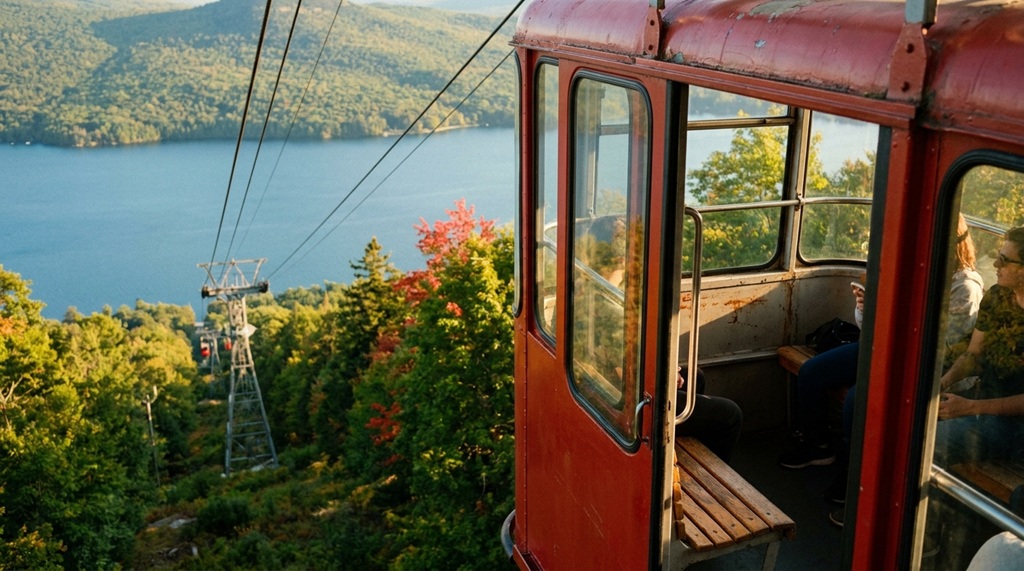
Highway 61 is the drive people picture when they think “North Shore,” running roughly 175 miles along the lake with color on one side and water on the other for most of it. If you’d rather not drive the whole thing, the Lutsen Mountains gondola and the Gitchi-Gami State Trail cover the same scenery from a chairlift or a bike seat.
The Summit Express Gondola at Lutsen Mountains climbs straight up into the Sawtooth ridgeline, putting you above the tree line for a view Highway 61 simply can’t match from the car.
For something slower, the Gitchi-Gami State Trail runs a paved, 17-mile stretch between Gooseberry Falls and Silver Bay built specifically for road bikes. It threads past waterfalls and the Split Rock Lighthouse overlook without a single car in the way.
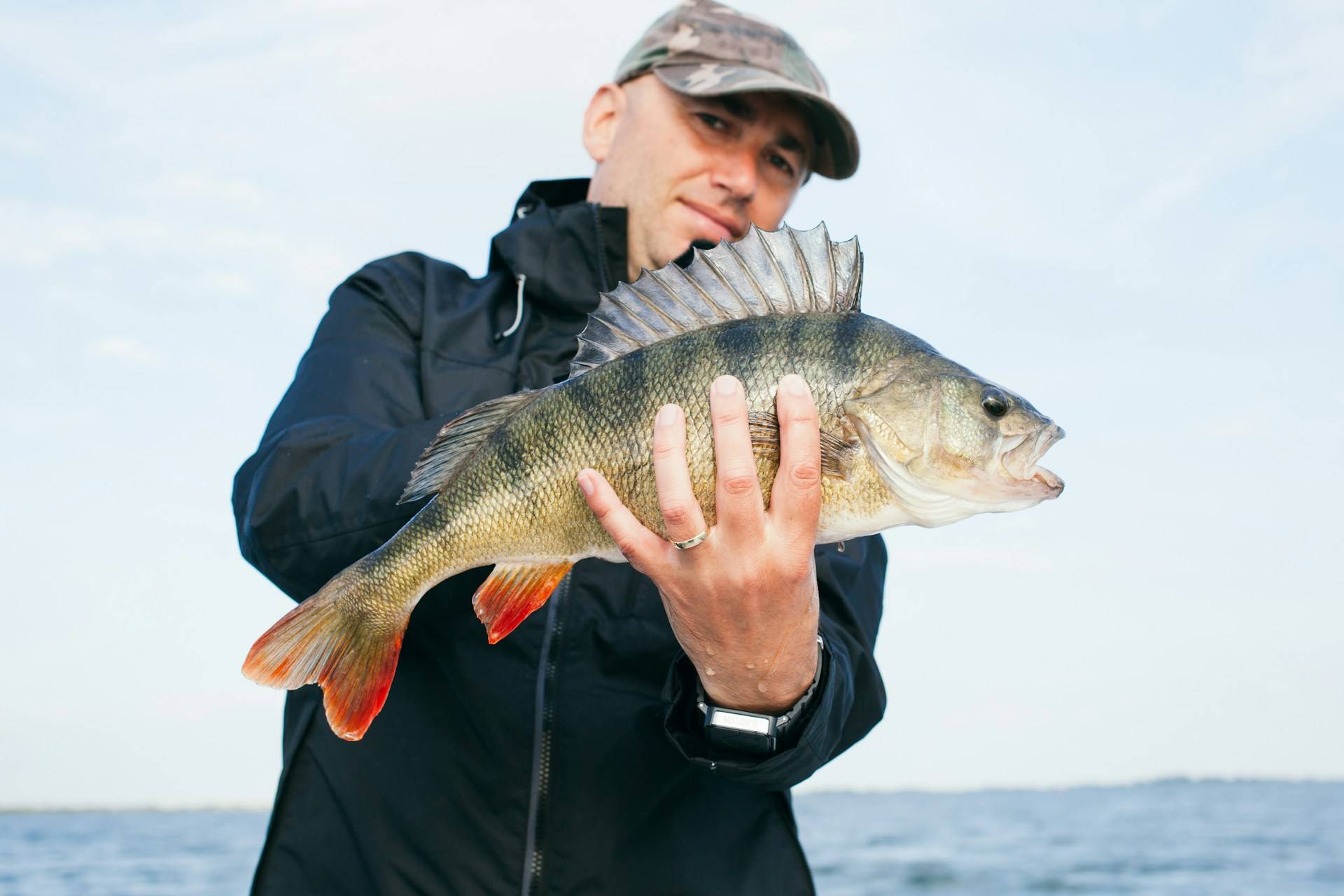
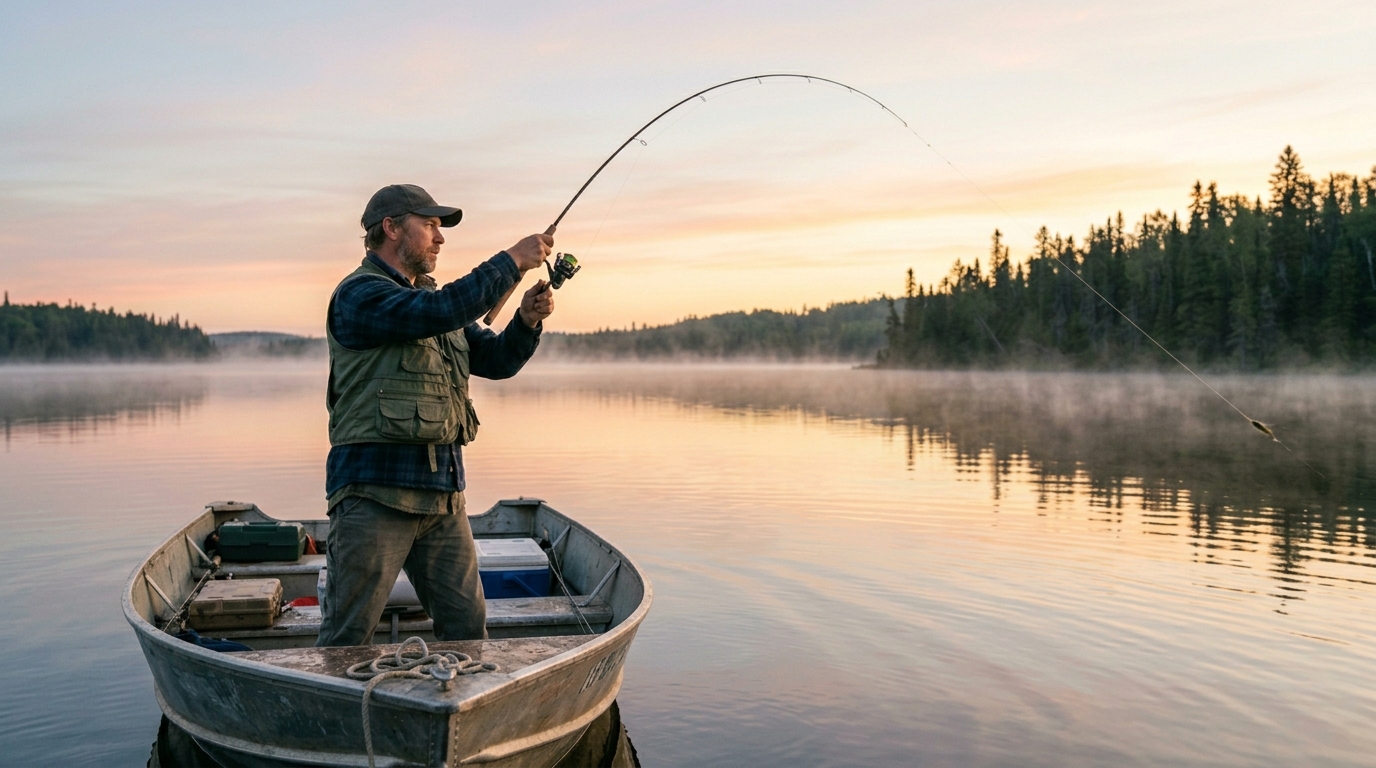
Fall is also prime season for fly fishing the North Shore’s river mouths. Cooling lake water pulls trout and salmon in toward shore to feed before winter.
Anglers who’d rather stay dry can play a round at Superior National Golf Course in Lutsen, a 27-hole course previously ranked the top public course in Minnesota.
| State Park | Located Near | Signature Fall Feature |
|---|---|---|
| Gooseberry Falls | Two Harbors | Waterfall gorge lined with birch and aspen |
| Split Rock Lighthouse | Beaver Bay | Cliffside lighthouse above the open lake |
| Tettegouche | Silver Bay | Shovel Point cliffs, Baptism River gorge |
| George H. Crosby-Manitou | Finland | Backcountry terrain, far fewer crowds |
| Temperance River | Schroeder | Narrow gorge carved through solid rock |
| Cascade River | Lutsen | A staircase of waterfalls near the shore |
| Judge C. R. Magney | Grand Marais | The Devil’s Kettle waterfall |
| Grand Portage | Grand Portage | Overlook trail toward the Canadian border |
The gondola and the byway only scratch the surface of what’s nearby. We rounded up the rest of the area’s best stops for a longer stay. Read: Things to Do in Lutsen, MN →
What Else Is Worth Doing During Peak Color Season?
Beyond hiking and driving, fall is agate-hunting season on Lake Superior beaches, and the DNR runs a handful of one-day naturalist programs at Gooseberry Falls that most visitors never hear about. Both are free, both take an hour or two, and neither shows up on the typical “top things to do” list.
Lake Superior agates wash up along cobble beaches all year. Fall storms churn up fresh gravel and expose stones that summer crowds have already picked through.
Look for a reddish, banded stone with a waxy shine. No permit is required to collect them on public beach access points.
Small-town harvest festivals and gallery walks pop up in Grand Marais and Tofte through October as well, timed deliberately to catch leaf-peeping traffic passing through on Highway 61.
Fishing, hiking, biking, or just the drive itself, fall works for every kind of trip. See which North Shore retreat style fits what you have planned. Explore Our Retreats →
Where Should You Stay for the Best Fall Color Access?
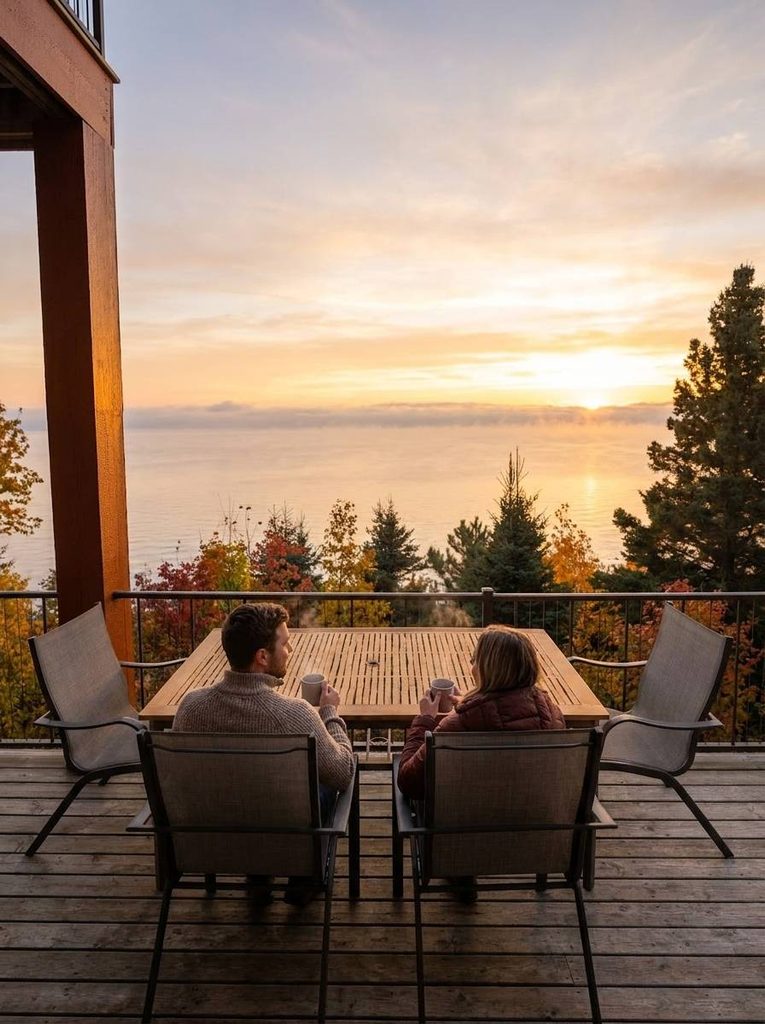
Aspenwood, our cabin on Lake Superior in Tofte, sits directly on both color waves. Every room has an unobstructed lake view, and the Gitchi-Gami Trail runs right from the driveway.
That location matters more than people expect. You’re close enough to Lutsen and Oberg Mountain for the inland maple wave, and the cabin itself sits inside the shoreline birch and aspen belt for the second wave weeks later.
Two gas fireplaces and a Jacuzzi suite make the cooler October evenings part of the experience instead of something to plan around.
Guests who book a Friday-to-Sunday stay this time of year routinely tell us the drive home is the hardest part of the trip.
What Should You Know Before You Go?
A few practical details save a lot of frustration once you’re actually on the road:
- Weekdays beat weekends. State park lots along Highway 61 fill by mid-morning on fall Saturdays. A Tuesday trip gets you the same color with none of the parking hunt.
- Buy a state park vehicle permit before you leave. Every park along the byway requires one, and buying it in advance skips a line at the gate.
- Pack for a 20-degree swing. Mornings on the lake run cold even when afternoons feel mild. Layers matter more than a single heavy coat.
- Book lodging earlier than you think you need to. Fall weekends sell out faster than summer ones on the North Shore, especially during peak color weeks.
- Wear real footwear on the trails. Oberg Mountain and the Gooseberry gorge both have uneven, rocky sections that regular sneakers handle poorly once wet.
What Should You Do Next?
Pick your window first, then build the trip around it. If you want the inland maples, aim for the first two weeks of the season. If you’d rather catch the shoreline gold, wait until the back half of the window.
Either way, check the DNR’s weekly update before you lock in dates, since this year’s drought is making the calendar less reliable than usual.
From there, the rest is easy: pick a home base close to both waves, plan two or three hikes, and leave room in the schedule for wherever the color actually is that week.
Frequently Asked Questions about Fall Colors MN North Shore
What Are Some Good Fall Color Drives on the Minnesota North Shore?
Highway 61 is the main event, running roughly 175 miles along Lake Superior with color on one side and open water on the other. The Superior National Forest Scenic Byway and the Gunflint Trail both branch inland from the shore and catch the earlier maple wave, giving you a second drive with a completely different feel from the lakeside route.
What Is the Best Time to See Fall Colors in Minnesota?
On the North Shore specifically, plan for mid-September through mid-October to catch both waves. Highland maples usually peak first, from mid-September into early October, and shoreline birch and aspen follow a couple weeks later. Checking a live tracker beats picking a date months ahead, especially in a drought year like this one.
What Are Some Hidden Gems on the North Shore of Minnesota?
The Kadunce River Trail near Judge C. R. Magney State Park sees a fraction of Gooseberry’s foot traffic despite a similarly dramatic river gorge. Agate beaches along the shoreline near Tofte are another quiet option, especially early morning after an overnight wind. Both reward visitors willing to skip the two or three most famous stops for something less photographed.
What Are Some of the Best Towns to Visit in Minnesota During the Fall?
Grand Marais anchors the north end of the shore with galleries, harvest events, and harbor views. Two Harbors works well as a base for Gooseberry Falls and Split Rock, while Tofte and Lutsen sit closest to both the maple ridgeline and the shoreline birch belt, making them the most efficient base for a color-chasing trip.
How Many Days Should You Plan for a North Shore Fall Color Trip?
Three to four nights lets you catch both color waves without rushing. A shorter trip forces you to pick one wave over the other, while a longer stay gives you buffer days if weather or drought conditions shift the color timeline while you’re already there.
Your Fall Color Trip Starts With One Conversation
We’ve watched fall roll through this stretch of shoreline for years, and no two seasons play out the same way.
This year’s drought makes that more true than usual. A flexible, well-timed trip beats a rigid one.
Aspenwood sits inside both color waves, on a trail that puts the whole shoreline within walking distance. If you want help timing a stay around whichever wave you’re chasing, we’re the ones to ask.
Peak color windows are short, and this year’s cabin dates are booking just as fast. Reach out and we’ll help you time your stay right. Contact Loon Lodge →